
Exploring All the Ways to Knit: Needles, Fingers, Looms and Beyond
- helenB-a
- Dec 1, 2025
- 4 min read

Knitting is a craft that has evolved far beyond the traditional image of two needles and yarn. Today, there are many ways to create knitted fabric, each offering unique textures, speeds, and experiences. Whether you prefer the classic method or want to try something new, understanding the variety of knitting techniques can open up exciting creative possibilities. This post explores all the ways to knit, from needles and fingers to looms and machines, including some lesser-known methods.
Knitting with Needles
The most familiar way to knit involves using two knitting needles. These needles come in various materials such as metal, wood, bamboo, and plastic. The choice of needle affects the knitting experience, with wooden needles offering warmth and grip, while metal needles provide smoothness and speed.
Types of Needles
Straight Needles: The classic pair, straight needles are ideal for flat knitting projects like scarves and blankets.
Circular Needles: These have two short needles connected by a flexible cable, perfect for knitting in the round or large flat pieces.
Double-Pointed Needles (DPNs): Used for small circular projects like socks or sleeves, DPNs come in sets of four or five.
Advantages of Needle Knitting
Precise control over stitch size and tension.
Wide range of stitch patterns and textures possible.
Portable and easy to carry.
Example Project
A simple scarf knitted with straight needles and worsted weight yarn is a great beginner project. It allows practice of basic knit and purl stitches while producing a cozy accessory.
Finger Knitting
Finger knitting is a fun and accessible way to knit without any tools. It involves looping yarn around your fingers to create a chain-like fabric. This method is especially popular with children or those who want to quickly make chunky scarves or decorations.
How Finger Knitting Works
Wrap yarn around your fingers in a specific pattern.
Use your fingers to pull loops over one another, creating stitches.
Continue until the desired length is reached.
Benefits of Finger Knitting
No equipment needed.
Great for bulky yarns and quick projects.
Easy to learn and relaxing.
Example Use
Finger knitting with thick, chunky yarn can produce a warm, textured scarf in a short time. It’s also useful for making bracelets or simple home decor items.
Hand Knitting with Bulky Yarn
Knitting with your hands, especially using bulky or super bulky yarn, is a tactile and fast way to create large stitches and cozy fabrics. This method is sometimes called arm knitting.
How to Arm Knit
Use your arms as the needles.
Wrap the yarn around your arms and pull loops over.
The large scale of the stitches creates dramatic, chunky textures.
Why Try Hand Knitting
Extremely fast for big projects like blankets.
Produces a bold, modern look.
No tools required, just yarn and your arms.
Example Project
A chunky arm-knit blanket made with super bulky yarn can be completed in a few hours. It’s perfect for beginners or those who want a quick, stylish home accessory.
Loom Knitting
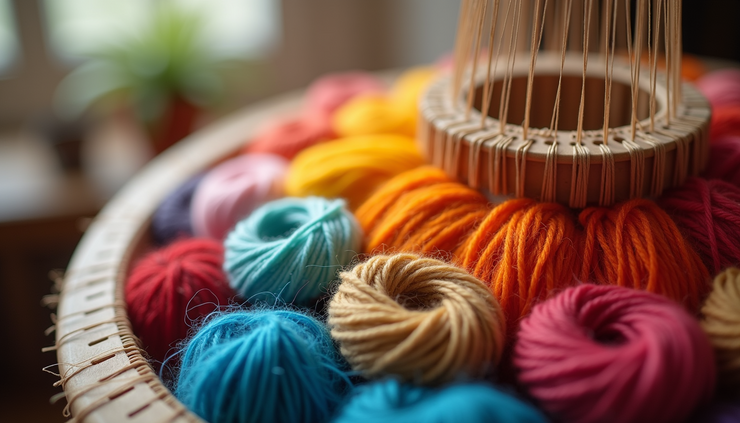
Loom knitting uses a frame or circular loom with pegs to hold stitches. Yarn is wrapped around the pegs and lifted over to create knitted fabric. Looms come in various sizes and shapes, suitable for hats, scarves, socks, and more.
Types of Looms
Round Looms: Ideal for hats and tubes.
Rectangular Looms: Used for flat pieces like scarves.
Knitting Boards: Long, narrow looms for flat knitting.
Advantages of Loom Knitting
Easier on the hands for those with arthritis or limited dexterity.
Faster than needle knitting for some projects.
Great for beginners to learn stitch patterns.
Example Project
A cozy hat made on a round loom can be completed quickly and with minimal skill. Loom knitting also allows for easy experimentation with color patterns.
Knitting Machines
Knitting machines automate the knitting process, allowing for rapid production of fabric. They range from simple manual models to complex electronic machines used in industrial settings.
Types of Knitting Machines
Flatbed Machines: Produce flat panels of fabric.
Circular Machines: Create seamless tubes, ideal for socks or sleeves.
Electronic Machines: Programmable for intricate patterns.
Benefits of Knitting Machines
Speed up production significantly.
Consistent stitch quality.
Ability to create complex designs with less manual effort.
Example Use
Small home knitting machines can make scarves, hats, or sweaters faster than hand knitting. Industrial machines produce large quantities of fabric for clothing manufacturers.
Other Knitting Methods
Beyond the common techniques, there are several other ways to knit that offer unique experiences.
Spool Knitting
Also called French knitting or corking, spool knitting uses a small cylinder with pegs. Yarn is looped around the pegs and lifted to create a narrow tube of knitted fabric. It’s often used for making cords or decorative trims.
Tunisian Crochet
While technically a crochet technique, Tunisian crochet creates a fabric that looks similar to knitting. It uses a long hook to pick up multiple loops, combining elements of knitting and crochet.
Finger Loop Braiding
An ancient technique that uses loops on fingers to create braided cords. Though not knitting in the strict sense, it produces fabric-like cords useful for trims and accessories.
Choosing the Right Method for You
Each knitting method has its strengths and suits different needs:
Needle knitting offers versatility and precision.
Finger knitting is simple and quick for chunky projects.
Hand knitting with bulky yarn creates bold textures fast.
Loom knitting is gentle on the hands and beginner-friendly.
Knitting machines excel in speed and consistency.
Other methods add variety and specialty options.
Try experimenting with several techniques to find what fits your style, project goals, and comfort.


Comments